
1. Look for signals that agree
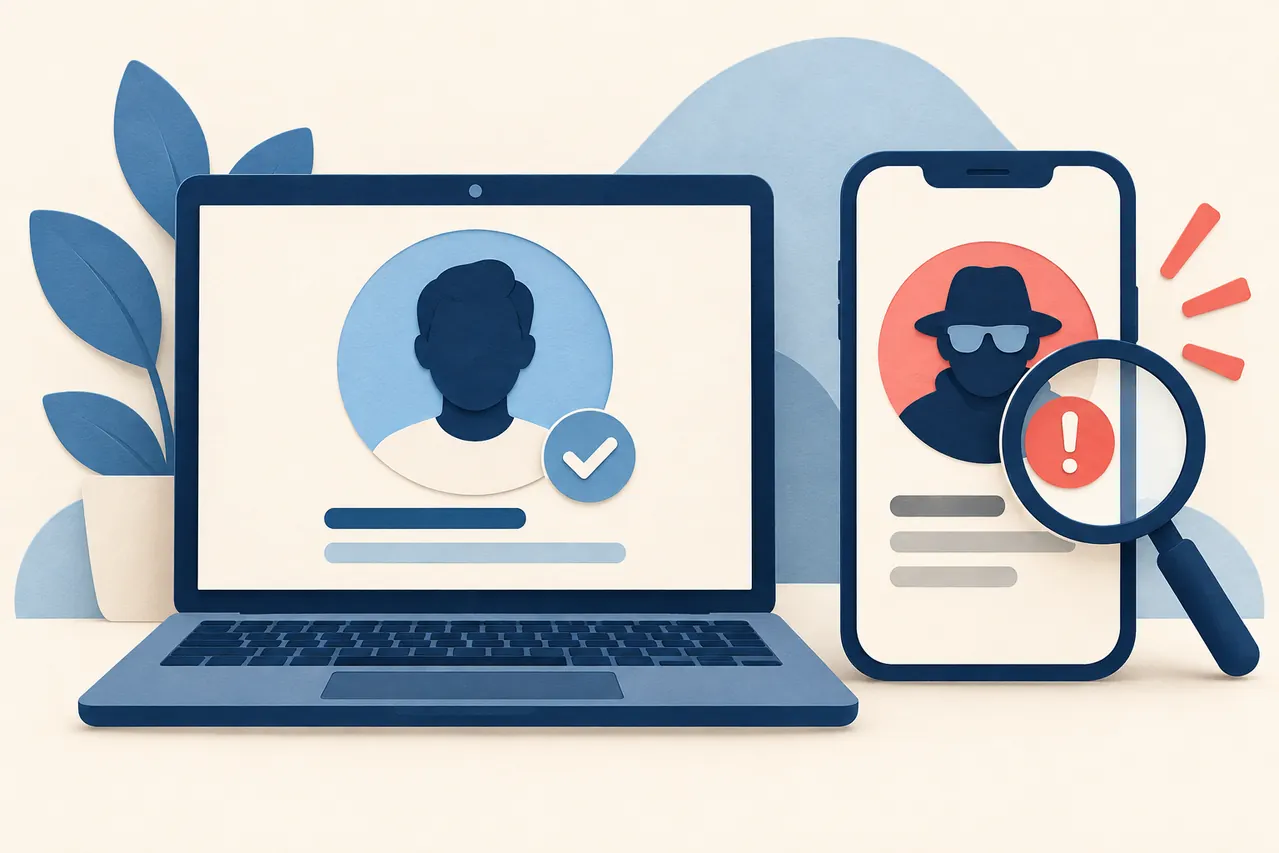
Check the precise profile address, its history, publicly linked websites and the consistency of its posts. A polished photograph, a large following or a recent account never settles the question on its own. Impersonators can copy pictures and biographies, while a genuine account may have little activity.
2. Confirm the request elsewhere
If a friend, business or organisation asks for money, a code or urgent action, contact them using a number or address you already had. Avoid the contact details supplied in the suspicious message. Open the official app or website yourself instead of following a received link.
3. Preserve evidence before reporting
Record the profile URL and date, then capture the messages and specific requests. Use the platform reporting tools and select impersonation when that option is available. Warn anyone who might have received the same message without amplifying the fraudulent link.
4. If someone copies your identity
Secure your real account and its email address first. Share a short warning from channels your contacts already know and ask them not to interact with the copy. If anyone sent personal information or money, keep the conversation and consult the reporting steps for their country.
Sources and method
This editorial synthesis draws on the sources below. Features may change by service and country.
- FTC — Scams that start on social media ↗
- FTC — Recover a hacked account ↗
- Messenger — Report impersonation ↗
World Web Certified · Suggest a correction.